
Understanding HazCom Labeling Requirements: A Complete Guide
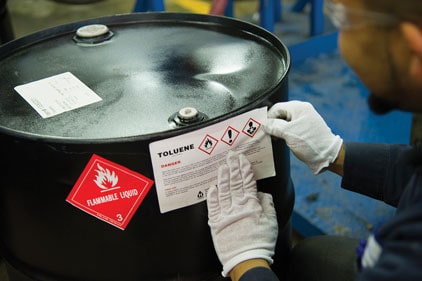
HazCom labeling requires hazardous workplace chemicals to be labeled with clear, standardized information about the chemical’s identity and the risks it presents. Employers are legally responsible for making sure labels are correct, visible, and kept up to date.
The Occupational Safety and Health Administration (OSHA) estimates that about 32 million workers in more than 3.5 million workplaces regularly face exposure to hazardous chemicals, a figure reported by the Texas Department of Insurance. Clear, accurate labeling is critical for identifying chemical hazards, understanding the risks, and guiding safe handling.
Learn key HazCom labeling requirements, when labels are legally required, and common pitfalls to avoid.
What Are HazCom Labeling Requirements?
HazCom labeling ensures clear identification of hazardous chemicals, so employees can recognize risks and handle substances safely. Labels provide immediate hazard awareness, while Safety Data Sheets (SDS) offer more detailed guidance for storage, use, and emergency response.
Following a labeling requirements checklist helps employers maintain consistency and compliance across all containers.
Product Identifier
The product identifier shows the chemical name or code used to distinguish it from other substances. It must match the identifier listed on the SDS for clarity.
Signal Word
A signal word, either “Danger” or “Warning,” communicates the severity of the chemical hazard. “Danger” indicates a more serious risk, while “Warning” signals a less severe hazard.
Hazard Statements
Hazard statements describe the specific dangers posed by the chemical, such as flammability or toxicity. They give employees a clear understanding of the risks before handling.
Pictograms
Pictograms are standardized red-diamond symbols that quickly convey hazard types. Each symbol represents a different category, like health hazards or environmental risks.
Precautionary Statements
Precautionary statements provide instructions for safe handling, storage, and emergency response. They help workers take specific steps to prevent accidents or exposure.
Supplier Information
Supplier information includes the name, address, and contact details of the manufacturer or importer. This allows employees to quickly get more information if questions or emergencies arise.
Is Your Employer Legally Required to Label Hazards Correctly?
OSHA requires every employer who handles hazardous chemicals to label them correctly. Shipped containers must carry complete HazCom/Globally Harmonized System (GHS) labels, in-house containers must display the same critical information, and secondary containers need labels whenever employees transfer chemicals for use or storage.
Employers must keep labels accurate, legible, and consistent with the corresponding Safety Data Sheets (SDS). Skipping proper labeling can trigger OSHA citations and put workers at serious risk. Clear, up-to-date labels are a legal obligation and a key step in preventing chemical accidents.
When Are Workplace Labels Not Required?
OSHA allows only limited exceptions to HazCom labeling. For example, portable containers filled for immediate use by the employee who prepared them do not require a full label. Employers may also use alternative workplace labeling systems if employees are trained to recognize hazards and understand how to handle the chemicals safely.
Exemptions are narrow and do not remove the employer’s responsibility to communicate hazards effectively. All other containers must carry complete labels consistent with Safety Data Sheets (SDS). Even when a full label is not required, employees must still be able to identify hazards and follow safe handling procedures.
Implementing a HazCom Labeling Program
Building and maintaining a compliant HazCom labeling program helps protect employees and ensures OSHA compliance. Employers should follow a structured approach and involve suppliers in keeping information accurate.
Key steps and considerations:
- Take a chemical inventory
- Assign hazard classifications
- Design accurate labels
- Train employees on reading labels and understanding hazards
- Maintain Safety Data Sheets (SDS)
- Coordinate with suppliers and manufacturers
- Use durable labels and consistent formats
Frequently Asked Questions
How Do OSHA Compliance Guidelines Affect Labeling Practices?
OSHA compliance guidelines shape how employers organize, update, and monitor chemical labels in real-world operations. Companies must track which chemicals enter the workplace, verify that each label matches the latest hazard classification, and assign responsibility for label maintenance to specific staff.
Many workplaces adopt digital tracking systems or labeling software to reduce errors. Linking labels to Safety Data Sheets, spill response procedures, and training programs ensures employees understand hazards in context. Regular inspections help identify worn, missing, or inconsistent labels before accidents occur.
What Are the Most Common HazCom Labeling Mistakes to Avoid?
Many workplaces fail to keep pictograms updated, use outdated hazard statements, or allow inconsistencies between labels and Safety Data Sheets (SDS). Even small errors like typos or misaligned product identifiers can create confusion and increase the risk of chemical incidents.
Another mistake is ignoring labels that become illegible, damaged, or detached due to wear, spills, or environmental conditions. Employers sometimes overlook secondary containers or fail to train staff to recognize subtle differences in hazard categories.
What Are the Penalties for Not Following HazCom Labeling Requirements?
OSHA can issue citations and monetary penalties when employers fail to meet HazCom labeling requirements. Violations often fall under “serious” or “other-than-serious” categories, depending on whether improper labeling could cause injury or illness. Repeated or willful violations can trigger higher fines and increased scrutiny during future inspections.
Who Is the Point of Contact for Safety Data Sheet Requirements?
Employers must designate a clear point of contact to manage Safety Data Sheet requirements. The role usually falls to an environmental health and safety manager, compliance officer, or operations leader who oversees chemical inventory and hazard communication.
The designated contact ensures SDS remain current, accessible to employees, and aligned with container labels. They also coordinate with manufacturers and suppliers to obtain updated SDS when formulations or hazard classifications change.
Making Hazard Communication Work for You
HazCom labeling requirements are the backbone of chemical safety, making sure hazards are visible, understandable, and actionable for every employee. Clear labels paired with accurate Safety Data Sheets create a workplace where risk is managed, not overlooked.
KHA turns complex SDS and HazMat data into systems that actually work for people, not just regulations. Our approach combines smart technology with practical workflow solutions, so safety information is always accessible and easy to act on.
Reach out to our team to explore solutions that can make compliance simpler and workplace safety more reliable.